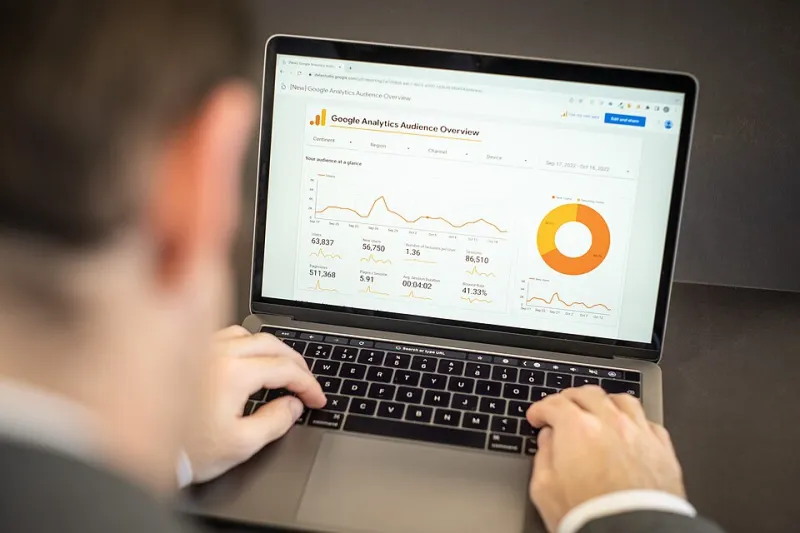
A CPA Went Through Our AI Subscriptions Line by Line — She Found $217 a Month Paying for the Same Job Twice

Photo: Ilan Besor, CC BY-SA 4.0, via Wikimedia Commons
The Setup: We Handed Over the Credit Card Statement
Here at Top AI Product, we test AI tools for a living, which means our agency's software stack had quietly ballooned to 14 subscriptions. Writing assistant here, meeting notetaker there, an AI design tool nobody remembered buying. Sound familiar?
So we did what any self-respecting small business should do: we called Dana Whitfield, a CPA in Columbus, Ohio who specializes in small-business software spend, and asked her to audit us. Not our books — our AI stack.
Her verdict after ninety minutes with our statements? "You're paying $217 a month for tools doing the same job as tools you already own. That's a car payment."
Finding #1: Three Tools Were Doing One Job
The biggest offender was our writing stack. We were subscribed to a general-purpose chatbot at $20/month, an AI copywriting platform at $49/month, and a "brand voice" tool at $29/month. Dana flagged all three in one pass.
"Functionally, these overlap about 80%," she told us. "You're paying $98 a month for three ways to write an email. Pick one, kill the rest."
When we actually tested it, she was right. Our junior staff admitted they'd defaulted to the chatbot for everything and hadn't logged into the copywriting platform in six weeks. That's $49 a month for an abandoned login — a zombie subscription in the wild.
Finding #2: The Seat Nobody Uses
Next up: licensing waste. Our AI transcription tool charged per seat, and we were paying for five. Dana pulled the admin dashboard and found active usage from exactly two people.
"Per-seat pricing is where small businesses leak the most money," she explained. "Vendors count on you never checking. Audit seat counts quarterly, not annually."
Downgrading from five seats to three saved us $24/month on the spot. Total elapsed time: four minutes.
Finding #3: The Annual Plan Trap
Here's the one that stung. We'd locked into an annual plan for an AI project-management add-on at $388/year to "save 20%." We hadn't opened it since March.
"Prepaying for a tool you might not need in six months isn't a discount, it's a bet," Dana said. "For AI tools specifically — a category where products get replaced every quarter — monthly billing is almost always the smarter default. You can always upgrade to annual later once you know you'll keep it."
Finding #4: The Deductible Question
Since we had a CPA in the room, we asked the question every US small-business owner asks: is this stuff even deductible?
Short answer: yes, generally. Software subscriptions used in the ordinary course of business are typically deductible as ordinary and necessary business expenses under Section 162. But Dana flagged two nuances worth knowing:
- Mixed-use tools need allocation. If you use an AI tool partly for business and partly for personal stuff, only the business portion is deductible. Track it.
- Annual prepaid subscriptions may need to be spread. Depending on your accounting method, a big annual prepayment might not be fully deductible in the year you paid it. Ask your own tax pro — this is general info, not tax advice.
"Deductible doesn't mean free," Dana reminded us. "A wasted dollar you can write off is still a wasted dollar. It's just a wasted dollar with a small discount."
The Final Tally
Here's what Dana's audit cut from our stack:
| Cut | Monthly Savings |
|---|---|
| Duplicate copywriting tool | $49 |
| Redundant "brand voice" app | $29 |
| Two unused transcription seats | $24 |
| Zombie meeting-summary tool | $35 |
| Downgraded annual plan (prorated) | $32 |
| Overlapping AI image tool | $48 |
| Total | $217 |
Fourteen subscriptions became eight. Nobody on the team noticed anything missing — which tells you everything about how much those tools were doing in the first place.
Run the Same Audit on Your Stack
You don't need to hire a CPA to catch the obvious stuff. Dana shared the checklist she uses with her own clients, and we've turned it into a free download. Here's the short version:
- List every AI subscription with its price and billing cycle. Check the actual credit card statement, not your memory.
- Write one sentence per tool describing its core job. Any two tools with the same sentence? One of them goes.
- Pull usage data from admin dashboards. Under 5 logins a month per seat is a red flag.
- Check last-login dates. Sixty days of silence usually means a zombie subscription.
- Switch annual plans on unproven AI tools to monthly. In this category, products change too fast to prepay.
- Tag each tool business vs. mixed use before tax season, not during it.
The takeaway Dana left us with applies to almost every small business riding the AI wave right now: the problem is never that you need one more tool. It's that you're already paying for the same capability two or three times and nobody's keeping score.
Somebody should be. For us, that somebody cost one hour of a CPA's time and saved $2,604 a year.